


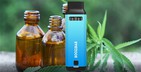

Right now, CBD is all the rage, but ten years ago it took a team effort of growers, researchers, breeders, and scientists to identify the few remaining high-CBD strains in existence and match them up with growers willing to take a chance on the then obscure cannabinoid. Next, they had to convince profit-minded dispensary buyers to stock their shelves with strains that don’t get you high.
Not surprisingly, those efforts were met with much initial skepticism. But then it quickly became apparent that CBD-rich strains appeal to a lot of people, particularly those seeking the medicinal benefits of cannabis without any intoxicating effects—including seriously ill children.

The Point of It All
The earliest pioneers of cannabis horticulture (circa 10,000 years ago), though new to agriculture itself, would certainly have been capable of using selective breeding to enhance desired traits from generation to generation. If nothing else, then by simply culling out plants that grew poorly over the course of the season and planting seeds from crops that flourished.
So what are desired traits when it comes to cultivating cannabis?
Growers would want plants that thrive in their local climate, including resistance to mold, disease, insects, and drought. But that’s just to ensure a reliable supply.
In a time long before modern science, the most observable and accurate way to gauge potency was by ingesting some of your harvest and seeing how high you got.
The point of it all is potency, and in a time long before modern science, the most observable and accurate way to gauge potency was by ingesting some of your harvest and seeing how high you got. Which is all pretty much any cannabis breeder had to go on until about ten years ago, when analytic testing labs became widely available in California and other states with legal medical cannabis.
Turns out the medicinal and psychoactive effects of a particular cannabis strain depends on a complex interplay of cannabinoids, terpenes, and flavonoids that researcher Ethan Russo has dubbed the entourage effect. In 2006, Russo led a team that published a fascinating paper titled Phytochemical and genetic analyses of ancient cannabis from Central Asia, which has an abstract that opens like something out of Indiana Jones.
“The Yanghai Tombs near Turpan, Xinjiang-Uighur Autonomous Region, China have recently been excavated to reveal the 2700-year-old grave of a Caucasoid shaman whose accoutrements included a large cache of cannabis, superbly preserved by climatic and burial conditions.”
The samples were so “superbly preserved,” in fact, that Russo and his team were able to have them lab tested, and found through gas chromatography that the 2,700-year-old shaman stash appeared to be “a high-THC cannabis strain wherein CBD is only a minor component.”
The Unknown Cannabinoid
It wasn’t that ancient cannabis smokers had it out for CBD, they just didn’t know such a thing existed. The compound wasn’t isolated in a lab until 1940 and remained obscure long after that, largely because it doesn’t get you noticeably high.
Since the 1980s, studies have hinted at CBD’s potential for treating pain, insomnia, nausea, anxiety, spasticity, MS, Alzheimer’s, cancer, seizure disorders and a host of other serious conditions. But for the general public, it was completely unknown—and since CBD actually works to temper the high of THC, cannabis breeders had been unwittingly breeding it out of the cannabis gene pool for 10,000 years.
Related
We Asked a Scientist: What’s the Right Dose of CBD?
When Steep Hill Lab in Oakland opened in 2007, the first commercial medical cannabis testing lab in the United States found that the cannabis flowers they tested averaged over 15% THC, but only one in every 600 samples reached 4% CBD.
The Search for CBD
In 2010, journalist Fred Gardner (editor of O’Shaughnessy’s: The Journal of Cannabis in Clinical Practice) and author Martin Lee (Smoke Signals, Acid Dreams) co-founded Project CBD, a non-profit educational clearinghouse for physicians, scientists, growers, cannabis-testing laboratories, patients, and retailers interested in learning more about the medical utility of CBD.
They fully understood that CBD has important benefits, but that finding CBD-rich cannabis in the underground market was virtually impossible.
Through years of careful research and reporting, they fully understood that CBD has important therapeutic benefits, but that finding CBD-rich cannabis in the underground market was virtually impossible. So they teamed with Steep Hill Labs and Harborside Health Center (then the nation’s largest medical cannabis retailer) to begin immediately flagging any sample that tested high in CBD. Project CBD would then meet with the grower, and work to ensure that their particular strain proliferated and reached patients who could benefit.
Most of these growers understood their heirloom strains had unique properties, but didn’t know why—including Lawrence Ringo, the late proprietor of the Southern Humboldt Seed Collective. Ringo began growing cannabis while still a teenager, and 40 years later became the first California plant breeder to stabilize a CBD-rich strain with his much-beloved Sour Tsunami.
In 2015, Dr. Sanjay Gupta—CNN’s Chief Medical Officer—reported on the Stanley Brothers in Colorado, who were having tremendous success treating pediatric seizure disorders with their high-CBD strain Charlotte’s Web, named for their most famous patient.
“Take the case of [six-year-old] Charlotte Figi, who I met in Colorado,” Gupta said by way of introducing his mea culpa on medical cannabis. “She started having seizures soon after birth. By age 3, she was having 300 a week, despite being on seven different medications. Medical marijuana has calmed her brain, limiting her seizures to 2 or 3 per month.”
This after the poor girl endured five years of failed pharmaceutical cocktails, and a series of terribly painful procedures that left her unable to walk, talk, or eat.
So no wonder, once they saw that incredible story on CNN, other families facing similar circumstances began to agitate for access to CBD. Along the way, the rest of the world got let in on the secret that there’s a lot more to weed than just THC. CBD is officially “trendy” now, but nearly a decade after the founding of Project CBD, there’s still a relative dearth of CBD-rich strains.
Though that’s changing—quickly.
The Hempire Strikes Back
Scientifically, the plant you smoke to get high and the plant you use to make rope are the same species. But legally, hemp is defined as a Cannabissativa plant that’s less than 0.3% THC on a dry weight basis—no matter how much CBD (or other cannabinoids) it produces.
Related
Indica vs. sativa vs. hybrid strains: understanding the differences between weed types
But wait, does that mean anyone who registers with their state can legally grow a crop of hemp that’s 15% CBD and looks just like any other budding resinous sinsemilla cannabis plant? Sure does. And if you don’t believe me, here’s the federal government’s new definition of hemp, from the 2018 Farm Bill, with my emphasis added:
(1) HEMP.—The term ‘hemp’ means the plant Cannabis sativa L. and any part of that plant, including the seeds thereof and all derivatives, extracts, cannabinoids, isomers, acids, salts, and salts of isomers, whether growing or not, with a delta-9 tetrahydrocannabinol concentration of not more than 0.3 percent on a dry weight basis.
Andrew Gruver is the head of operations at Tweedle Farms in Oregon, a retailer of high-CBD hemp flower that currently ships 15 different varietals to (almost) all 50 states.
“There are certain hemp strains that for me are pretty indistinguishable from high quality outdoor cannabis other than the lack of THC.”
“There are certain hemp strains,” he tells Leafly, “that for me are pretty indistinguishable from high quality outdoor cannabis other than the lack of THC.”
His favorite at the moment is Sour Space Candy, a descendent of Lawrence Ringo’s original Sour Tsunami with a cannabinoid content of 16.52% CBDA and .08% THC.
“It’s loud, it’s resinous, and it tastes good,” Gruver says. “Also, it’s high in terpinolene, which a lot hemp strains are not. Hemp typically exhibits high levels of myrcene, caryophyllene, or maybe some pinene. But we also get really interesting terpenes like bisabolol, farnesene, valencene.”
His other favorite strains include Hawaiian Haze from Oregon CBD, Berry Blossom from HGH, and Kush Hemp from Sovereign Fields. And we’re just getting started.
The search for high-THC cannabis dates back millennia, but this current exploration of CBD-rich cannabis breeding remains in its infancy.

A pounding heart, sweaty palms, racing thoughts: For those living with an anxiety disorder, these unwelcome symptoms can make everyday life feel debilitating.
One in 13 people around the world live with an anxiety disorder, making them the most common mental health disorder worldwide, according to the World Health Organization (WHO). For those living with anxiety, finding a safe method for managing symptoms is a critical concern.
Quick-acting anti-anxiety medication, such as Xanax and Valium, may offer instant relief but can become addictive. Long-range anxiety medications, such as Prozac, may help reduce symptoms over time, but don’t work for everyone.
Enter cannabidiol, better known as CBD. CBD has recently captured the spotlight as an alternative or complementary treatment for anxiety.
CBD: Snake oil or powerful anxiety treatment?
Clinical research on CBD as a treatment for anxiety disorders has proliferated in recent years with accumulating evidence pointing to its therapeutic potential.
Although most studies on CBD are preclinical and use animal models, clinical studies using human participants are now emerging.
1 in 13 people around the world live with an anxiety disorder, making them the most common mental health disorder worldwide.
In a double-blind study from 2019, 37 Japanese teenagers with social anxiety disorder (SAD) received 300 mg of CBD oil or a placebo every day for four weeks. The teens were assessed with surveys used to diagnose and measure SAD symptoms. The anti-anxiety properties of CBD reduced symptoms aligned with the disorder, providing relief comparable to Paroxetine, a drug commonly used to treat the condition.
Interestingly, in the follow-up, nine of the seventeen teenagers who received the CBD intervention also declared that they had decided to seek some form of treatment. Teenagers with SAD rarely seek help due to the stigma surrounding the condition and for fear of interacting with therapists.
A 2019 retrospective case study reviewed outpatients at a mental health clinic in Fort Collins, Colorado. Forty-seven of the patients sampled had expressed concerns about anxiety. Over three months, the majority of patients were given 25 mg of CBD daily in addition to treatment.
After the first monthly assessment, 79.2% of patients experienced an improvement in anxiety. After two months, 78.1% of patients reported a further improvement compared with the previous month.
However, there were also patients who reported that the symptoms of their anxiety worsened after taking CBD—15.3% felt their anxiety had become exacerbated after the first month and 19.5% felt their anxiety had worsened further after the second month.
Another study, done in 2018, also suggests that CBD may heighten anxiety. It included a small sample of individuals with paranoid traits and found that CBD exacerbated anxiety among some of the participants. Anxiety was measured through symptoms such as cortisol concentration, heart rate, and systolic blood pressure.
These contradictory findings may be due to factors such as small sample sizes and variations in dosing. CBD is a bidirectional medicine, which means it can cause opposing responses at different doses. We’ll delve deeper into this below.
How should I consume CBD for anxiety?
If you’re curious about using CBD oil as a tool to help manage your anxiety, education is critical. Understanding the pros and cons of the various ingestion methods can help you determine which form of consumption best suits your needs.
Tinctures and oils
CBD tinctures and oils represent a quick, easy, and accurate way to consume CBD. Most tinctures contain CBD in an alcohol base. CBD oils contain CBD extracts infused into a carrier oil, such as coconut or hemp seed oil.
Tinctures and oils are taken using a dropper, which allows you to easily measure intake. The cannabinoid rapidly enters the bloodstream when taken sublingually—results can kick in as quickly as ten minutes and last up to three to four hours.
CBD vape oils
CBD can be vaped using a special pen that vaporizes the oil. At present, the safety of vaping has come under intense scrutiny. A serious lung condition known as VAPI, or EVALI, has hospitalized more than 2,000 people and led to the deaths of 42. The federal Centers for Disease Control has found that most cases have been linked to the use of illicit-market THC vape cartridges tainted with vitamin E oil (tocopheryl-acetate).
CBD vape cartridges purchased in legal state-licensed cannabis stores are highly regulated, while CBD cartridges purchased from other sources are completely unregulated. Proceed with caution when considering any vaping product in an unregulated environment.
Edibles
CBD can be added to almost every food under the sun. While super easy to consume in this form—and often delicious, particularly as gummies—it may take an hour or more before results are felt.
What’s more, the oral bioavailability of CBD can hinder CBD absorption—when you consume CBD orally, it has to pass through your gastrointestinal tract before it is metabolized by the liver. As a result, a limited quantity of CBD makes it into the circulatory system.
It’s important to also note that the FDA has recently deemed food containing CBD illegal. You’ll have to get CBD edibles in state-licensed adult-use markets.
Smoking
Smoking provides an almost instantaneous method for enjoying the effects of CBD. Smoking sends the cannabinoid directly to the alveoli of the lungs, and from there, CBD molecules enter the bloodstream for rapid absorption. However, measuring your CBD intake can be tricky when you smoke, and the act of smoking itself can cause lung inflammation.
Dosing CBD for anxiety
If you read the studies cited above, you’ll notice that the dosing varied significantly between them. The teens in the Japanese study were provided with 300 mg of CBD daily, while the outpatients in the Colorado study received 25 mg. Why such a large discrepancy in dose?
As most scientists and clinicians will readily admit, there is no universally recommended dosage for CBD, and, to date, there haven’t been any large-scale clinical trials to inform dosage guidelines. In addition, the FDA is still learning about CBD—such as its cumulative effects on the body—before it decides on how to regulate it.
This doesn’t necessarily mean CBD is unsafe. Existing research already suggests that it appears to be a safe, well-tolerated treatment. If you’re interested in experimenting with CBD to manage your anxiety symptoms, aim for an informed, cautious approach to dosing (which is always a good idea). Below are some dosing considerations.
General dosing tips
Some basic factors that you should consider when devising a CBD dose include:
Body weight
Metabolism
Concentration of CBD
Severity of your anxiety
The concentration of CBD varies between products, and is generally expressed as milligrams (mg) per container.
Your unique body chemistry affects how you respond to CBD.
Once you know the potency of the CBD product you hold, you can use a dosage calculator or an app such as Accugentix to help settle on your perfect dose. Dosage calculators can provide a recommended dose in milligrams based on your body weight and the severity of your symptoms.
Your unique body chemistry also affects how you respond to CBD. Some individuals metabolize medicine faster than others, which can be attributed to genes or lifestyle. If you know that you metabolize medication quickly, it’s possible that you may benefit from a higher dose.
Related
The entourage effect: How cannabis compounds may be working together
Bidirectional effects
CBD may do different things at different doses, a phenomenon known as bidirectional effects. Overstimulation of the body’s endocannabinoid system may exacerbate symptoms instead of alleviating them.
Additionally, high levels of CBD, such as 300 mg, have been known to promote sleepiness and relaxation. Conversely, low levels of CBD may create an elevating response, inciting wakefulness and alertness. The best way to avoid unwanted bidirectional effects is to follow the adage: start low, go slow.
Start low, go slow
Titration refers to the process of adjusting the dosage of a medication to get its maximum benefits without adverse effects. CBD has been shown to be safe even when taken in high doses (300-600 mg), nonetheless, it’s advisable and more cost-effective to start with a low dose and increase it incrementally, observing how you feel as you go.
This method forces you to pay attention to subtle changes in your body as it responds to the medication. Everyone’s optimal dosage and tolerance is unique, and this process allows you to get acquainted with yours.
Dr. Dustin Sulak, a cannabis medicine expert at Healer.com, offers educational resources for novice and seasoned cannabis users alike to find their optimal dosage.
Talk to an expert on medical cannabis
If you’re still feeling unsure and you live in a state where you can safely converse with a health professional about CBD, consider scheduling a consultation. Some cannabis dispensaries also have medical experts on hand who can provide you with sound advice and dosage recommendations.
| dab pens |
| cbd vape cartridge |
| vaping cbd |
| oil vape pen |
| disposable vape |
| best cbd vape juice |
| best cbd vape |
| cbd vape kit |
| vaping cbd oil |
| cbd oil vape pen starter kit |
| oil pen |
| best vape pens |
| cbd oil vape pen |
| refillable vape pen |
|
cbd vape pen kit
|