


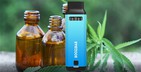

How to Calculate CBD Dosage?
When you consume CBD gummies, capsules or softgels, dosage is typically expressed per unit. For example, there may be 50 milligrams of CBD in each individual gummy. These products don’t offer much dosage flexibility since you can’t split up capsules easily. For instance, if one softgel capsule didn’t provide your desired result, you would have to take another full capsule, doubling the total dose.
CBD oil, on the other hand, makes it easier, to begin with a small dose. But calculating CBD oil dosage can be less straightforward. Oils and tinctures tend to come in a dropper bottle and, typically, only the total liquid volume and CBD contents are listed on the label. For example, the label might simply state there’s 1,500 milligrams of CBD in the 30-milliliter bottle.
But what does 1 milliliter look like? Due to the current lack of regulation of CBD, this calculation can be tricky. Start by figuring out the volume of a single drop in your dropper, which is usually 0.05 milliliters, according to Dr. Bugailiskis. If you’re unsure, ask the company.
Here’s where math comes in. Let’s continue with the 30-milliliter bottle with 1,500 milligrams of CBD and 0.05 milliliters in a single drop as our example.
1500mg÷30mL = 50 mg/mL
This bottle contains 50 milligrams of CBD per milliliter. Let’s see how many milligrams are in a drop:
50mg/mL ×0.05mL/drop = 2.5mg/drop
Each drop contains 2.5 milligrams of CBD.
Next, you can calculate how many drops you need to reach your goal dosage. Let’s say you want to consume 25 milligrams each day.
25mg÷2.5mg/drop = 10 drops
10 drops ×2.5mg = 0.5mL
With this CBD oil dosage calculator as your guide, you would find that you needed to consume 10 drops, or 0.5 milliliters, to reach 25 milligrams. And if you intend to consume 25 milligrams daily, you can expect this particular bottle to serve as a 60-day supply.
Some CBD products do some of this math for you and illustrate how many milligrams are in a milliliter, some even marking these points on the dropper so you know exactly what you’re taking.
CBD Dosage Chart for Different Ailments
Without FDA approval, there is little guidance in the U.S. on how much CBD a person should consume for various conditions.
In many medical studies on CBD, you see administered doses reach hundreds of milligrams a day, which sounds severe compared to our starting dosage example of 25 milligrams. However, Steven Phan, founder of Come Back Daily, a CBD dispensary in New York, points out that patients in these studies are often dealing with serious flare-ups and pain-inducing conditions compared to everyday dispensary customers.
Below are clinically-studied CBD dosages based on different ailments and conditions. Note: Some of the formulations studied contained THC as well—not all available dosage research sticks strictly to CBD.
| CONDITION | DOSE* |
|---|---|
| Anxiety | 300mg–600 milligrams a day[1][2] |
| Select forms of epilepsy | Starting at 2.5 milligrams per kilogram of the person’s body weight twice daily[3] |
| Central neuropathic and cancer-related pain | A maximum of 30 milligrams a day (or 12 sprays)[4] |
| Opioid addiction | 400 or 800 milligrams a day[5] |
| Arthritis | A maximum of 30 milligrams a day (or 12 sprays), or 250 milligrams applied topically[4] |
| *Dosages are based solely on small, short-term clinical study results where CBD proved significantly successful over placebo. Much larger studies are needed to further strengthen the evidence. | |
FDA-approved Epidiolex administers CBD orally as a liquid to treat seizures associated with Lennox-Gastaut syndrome, Dravet syndrome and tuberous sclerosis complex. The dosage of Epidiolex is determined by taking the patient’s weight in kilograms (kg) into account.
Several countries, including Canada and the U.K., have approved the use of Sativex, an oral spray with equal amounts of CBD and THC, to treat pain stemming from multiple sclerosis. Canada has also approved it for treatment of cancer pain.
The medical and research community still has a long way to go before figuring out what dose works best for each condition. At an individual level, consumers can experiment with caution until they find what works best for them.
How to Take CBD
Popular ways to take CBD include:
Oils and tinctures (extracts of plant material dissolved in ethanol): A liquid that comes in a bottle with a dropper
Gummies: A soft, chewable candy that’s often fruit-flavored
Sprays: A liquid that comes in a bottle with a nozzle for spraying into the mouth
Capsules: Tablets or softgels that are ingested by mouth
Vapes: CBD oil that’s heated without ignition, resulting in an inhalable vapor
Flower: Dried hemp plant that’s often ignited and smoked
Edibles: Any food that CBD oil has been added to, such as brownies or chips
Drinks: Any beverage that’s infused with CBD, often in the form of hemp extract
Your CBD product of choice will largely depend on your personal preferences, as well as your budget since prices vary depending on the potency of ingredients and manufacturing processes. Different mediums also offer varying levels of bioavailability—or how much of what you take is actually absorbed into your bloodstream to have an effect. For example, if you ingest 10 milligrams of CBD via 1 milliliter of liquid, your body might absorb about 60% of it, or about 6 milligrams.
Cannabinoids generally have a low bioavailability compared to other substances, according to Jordan Tishler, M.D., a physician specializing in cannabis treatment in Massachusetts. However, “products that contain emulsifiers like egg yolk (brownies) or lecithin (some gummies) do better,” he says.
With that said, ingesting CBD via gummies or other edibles may take longer to take effect since the CBD has to travel to your digestive system to be broken down and absorbed.
n Answer to the Opioid Epidemic?
Due to its inhibitory effect, CBD oil may help manage triggers for cravings and anxiety in people who use heroin. “From a research perspective, there’s interesting data that needs to be confirmed,” says Dr. Ring.
Some research has found that men and women using CBD oil experienced reduced cravings in drug-abstinent individuals. In a short-term study, 42 patients taking CBD oil reported reduced cravings for up to one week after their dose of CBD.
Dr. Ring says the findings are significant, suggesting that CBD oil could be a powerful tool in helping individuals seeking help for addiction.
Bottom Line
There is still much to be understood about CBD oil, and Dr. Ring continues to seek additional answers. She recently conducted an initial study on CBD oil. “I think at this point, both professionals and patients don’t know what product to use or how often,” she explains. “I think having answers to those questions can help.”
Dr. Adams adds, “CBD is probably not that harmful, but we shouldn’t expect it to be a medicine. It’s being promoted for all kinds of purposes for which it’s never been studied.”
It’s important to talk to your medical provider before beginning to use CBD oil, because it can interact with other medications you may be taking. Dr. Ring also advises looking at labels carefully and buying quality products. The lack of regulation means anything online can be easily compromised, and quality can vary widely. She suggests that you “read the reviews to ensure it has been tested, the ingredients are verified and there aren’t any contaminants.”