


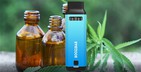

How CBD Cream for Pain May Support the Active Release Technique
As a chiropractor who is curious about natural forms of pain management, it was only fitting that I would eventually gravitate towards CBD cream for pain relief when treating my patients.
I was initially a bit skeptical about the value of CBD, but all it took was trying it myself to discover the potential benefits. I own and run my own practice, Get Adjusted Chiropractic P.C., and I love helping my patients, but it can be stressful to be your own boss. I couldn’t fall asleep easily and none of the usual methods were working. Finally, I decided to try taking some CBD at night. Remarkably, I had a great night’s sleep the very first time I tried it! I felt very refreshed waking up, I didn’t feel groggy or tired.
I decided to combine CBD Night Gummies for Sleep with topical CBD Fitness Cream on my shoulders and have never looked back.
The natural next step was to incorporate CBD cream for pain into my chiropractic practice, specifically with the Active Release Technique (ART), an aggressive form of stretching that is one of my specialties.
How Does CBD Work Topically?
Before I talk about how CBD cream for pain may benefit ART, let’s discuss how it actually works topically. The first part is easy: you simply rub some cream on the part of your body that feels pain, and in most cases it begins to work fairly quickly. When CBD is rubbed into the skin, it interacts with receptors in our body's own endocannabinoid system. These receptors exist to interact with endocannabinoids, which are natural compounds created by our bodies. It also interacts with phytocannabinoids, like CBD, that are similar, except they naturally occur in plants.
The endocannabinoid system’s goal is to bring the body back into homeostasis or balance. This interaction helps the body to re-balance itself, and thus supports pain relief.
The research into CBD’s ability to relieve pain is ongoing, but many studies show promising results, in addition to the plethora of anecdotal evidence I’ve seen with my own eyes in my practice. Some of these studies include a 2016 animal study that found CBD cream for pain to help with arthritis-related pain and swelling; a 2020 study about nerve pain that found many participants experienced reduced pain levels with the use of topical CBD oil; and a 2019 study that found application of CBD cream for pain twice a day to provide pain relief for a group of people suffering from a particular kind of jaw pain.
Active Release Technique and CBD Cream for Pain
In my practice, I’ve found CBD cream for pain to be exceptionally helpful when performing ART. Active Release Technique is a way of stretching people that tends to be very aggressive. I'm tearing muscle, I'm getting rid of trigger points, I’m engaging the muscles further than they're normally going.
When I'm stretching out deep muscles, it's very painful and there's no recourse in the moment. You feel much better later in the day, but it tends to cause a great deal of discomfort as I’m doing it.
But now, in my practice and in all my videos (also found on my Instagram and TikTok), I've begun using CBD cream for pain when stretching people as it could help with decreasing tension on the muscles that I'm working out. It's much easier on the body and it takes a lot of tension away from the muscles I'm stretching, which is not only convenient but also creates a better experience for my patients.
I like to pair ART with CBD because it may be able to help calm the muscles down, reduce soreness and tension, and may even help to perform a more restorative pattern. It's also nice to be able to cut some of the pain down while I'm doing the stretching because that allows me to do even more with patients. Often I'll do a few passes of a stretch, apply some of the topical CBD and let it sink in for a minute or two, during which the patient's pain levels will typically fall fairly quickly, and then I'm able to do more stretches with less discomfort to the patient.
I am a huge proponent of the idea that I don't want people to be reliant on me. They come in, they have a pain, they want me to fix it, and I'm happy to help. But I want people to be in charge of their own care. I want them to be able to do their part to help themselves. Patients can easily obtain CBD cream on their own; they don’t need a prescription and it’s now easily accessible from many reputable sources. So when people are able to use CBD cream for pain on their own, they feel like they're taking charge of their health. It holds them accountable to help themselves, which I like. We're working together as a team, rather than me doing everything.
Types of Pain I’ve Targeted with CBD Cream and ART
In general, CBD cream for pain may be able to provide relief for many common forms of chronic pain, from arthritis to back pain to a variety of muscle pains. At Get Adjusted, we treat all common spinal misalignment and bodily pain brought on by injury or lifestyle.
Since the COVID-19 pandemic began, over 80% of my patients are suffering from poor posture due to poor work set-up. Everyone is hunched over on their computers, with rounded shoulders, and heads and pelvises tilted forward. My biggest goal in treating the pain from poor posture is to retract shoulders, bring heads back, and rotate the pelvis forward and backward to engage a straighter performance in their seats.
Another component to ART that I often use with athletes is known as the Graston Technique. ART is already fairly aggressive, but I take it up a notch with Graston, which involves a shaped piece of steel. Essentially, I'm scraping muscles with this tool. Before I use the tool, I apply the CBD Relief Roller. After letting that sink in, I'll apply the CBD Fitness Cream and then begin the scraping process. It does hurt a decent amount during the scraping, but the CBD cream soothes at the same time.
As an all-natural, non-addictive alternative to many other pain treatments out there, CBD cream has been a massive help to many of my patients. When paired with the Active Release Technique, I’ve seen nothing but positive results. Empower yourself and consider how CBD might help you, too!
Minnesota’s low-dose THC beverage market is booming
Recreational marijuana possession, use and homegrows became legal in the state on Aug. 1.
In the meantime, consumers of all stripes are flocking to hemp-derived THC beverages, with monthly sales likely topping $1 million.
The rush has been fueled by widespread retail access, easing stigmas associated with cannabis and the state’s geographic position on the map.
Illinois and Michigan, the nearest states with adult-use sales, are hours away from most residents.
Minnesota regulators and lawmakers paved a wide path where hemp-derived THC could be sold in the Midwest market, a big reason why these types of beverages are selling well at liquor stores, restaurants, grocery chains – such as Cub supermarkets – and other locations that have largely been closed to THC products nationwide.
The 2018 Farm Bill legalized hemp and opened the door for sales of delta-8, delta-9 and other intoxicating hemp-derived cannabinoids with up to 0.3% THC by dry weight.
The Minnesota market, which doesn’t require a license to sell hemp-derived THC products, kicked the door wide open.
The widespread availability of low-dose THC offerings has helped bring new customers into the fold as well, particularly nonsmokers and baby boomers, industry insiders tell MJBizDaily.
“It has exposed an entire state of consumers to the fact that they can purchase these products the same way they can purchase alcohol,” said Leili Fatehi, partner and principal of Blunt Strategies, a government relations and communications firm in Minneapolis that helped craft the state’s cannabis legalization policies.
“And the sky hasn’t fallen. If anything, we’re seeing that consumers are much more prepared and comfortable engaging in conversations, learning about the products and approaching them safely.”
The beverage boom has also been a boon for local manufacturers – including one of the state’s larger independent craft brewers, Minneapolis-based Surly Brewing Co. – as well as national cannabis brands such as California-based infused beverage maker Cann, one of several companies shipping hemp-derived THC beverage products from Minnesota to consumers across the country.
A paradigm shift
The groundwork for Minnesota’s current boom in hemp-derived THC beverages was laid a little more than a year ago, in May 2022.
That’s when state lawmakers passed a groundbreaking law that allowed the sale of hemp-derived THC edibles in mainstream retail outlets such as grocery and convenience stores – distribution channels largely prohibited in recreational and medical cannabis markets.
“We saw an absolute explosion of our THC beverage market here in Minnesota almost overnight,” said Jason Tarasek, a Minneapolis-based cannabis attorney at Vicente.
“I won’t say it’s entirely incorporated into our culture and society, but it’s well along the way.”
Under the 2022 law, which took effect July 1 of that year:
Edibles must contain 5 milligrams or less of hemp-derived THC per serving, or 50 milligrams maximum per package.
Beverages must contain 5 milligrams or less of hemp-derived THC per serving, or 10 milligrams maximum per package.
ADVERTISEMENT
The prolonged hot streak, insiders say, could serve as a harbinger for a strong adult-use market, which will likely carry far more restrictions similar to those in other recreational marijuana states.
Minnesota became the 23rd state in the U.S. to legalize adult-use marijuana after Gov. Tim Walz signed a unique legalization bill into law last May that also permits the sale of hemp-derived cannabinoids such as delta-8 THC.
The adult-use legalization law will likely usher in changes for Minnesota’s hemp-derived THC marketplace – changes that could affect sales.
“The adult-use cannabis bill will impose greater regulation and licensing requirements upon these hemp-derived THC products,” Tarasek added.
“We may have started out fairly lax in terms of regulation, but we will be tightening that up.”
Retail sales in the adult-use market are expected to begin in early 2025, sources told MJBizDaily.
For comparison, the state’s medical marijuana retailers are projected to generate $110 million this year, growing to $230 million by the end of 2028, according to the 2023 MJBiz Factbook.
Brewed up opportunities
In developing the 2022 legislation that kicked off the low-dose THC frenzy, Minnesota lawmakers and industry stakeholders prioritized local business opportunities and a homegrown supply chain, according to Fatehi.
“We’ve gone through great effort to pass a law that creates this very Minnesota business-focused marketplace,” she said.
As a result, national brands have sought out Minnesota manufacturers.
For example, California-based Cheech & Chong’s Cannabis Co. is partnered with two Minnesota craft brewers – Surly and Duluth-based Bent Paddle Brewing Co. – to produce the celebrity brand’s expanding line of low-dose THC drinks.
“About 90% of the product sold in Minnesota is grown and manufactured in-state,” the Cheech & Chong’s chief marketing officer, Brooke Mangum, told MJBizDaily.
“We take pride in supporting local businesses.”
Los Angeles-based Cann, one of the country’s top-selling low-dose THC beverage makers, is partnering with Fair State Brewing Cooperative of Minneapolis to expand direct sales and wholesale distribution to 33 states.
“Because of the Minnesota law that has allowed for hemp-derived delta-9 beverages to flow pretty freely through the country, more than half of our revenue comes from non-cannabis dispensary channels,” Cann co-founder Luke Anderson said.
“It’s our manufacturing hub for products that are sold all over the country.”
Even the state’s homegrown grocery chain Cub – widely known as Cub Foods – is in on the action.
“Consistent with Minnesota state law, and where it does not conflict with local ordinances, Cub Foods has begun selling edibles and beverages containing low dosage amounts of THC in the company’s liquor stores,” confirmed Charles Davis, spokesperson for parent company United Natural Foods.
Cub, headquartered in Stillwater, operates about 80 supermarkets and pharmacies primarily in the Twin Cities area.
Getting a good economic read on this emerging product category is a challenge, with sales data and growth forecasts scant.
Seattle-headquartered cannabis analytics provider Headset told MJBizDaily it does not track hemp-derived THC sales in the Minnesota market.
The 2023 National Hemp Report, released in April, valued production of floral hemp grown in Minnesota at $11 million last year.
But that doesn’t account for hemp-derived products, which would escalate that estimate significantly.
The opt-out dilemma
While consumer access for low-dose THC products is widely available across the state, dozens of cities and counties have enacted measures to stymie business operations.
Municipal opt-outs of commercial marijuana and hemp programs are all too common from California to New York.
The bans undercut a market’s true potential and could provide a chilling effect.
“Cub will not be selling low-dose THC products where local municipality ordinances prohibit it,” Davis told MJBizDaily without a prompt.
According to statistics from the Public Health Law Center at the Mitchell Hamline School of Law in St. Paul:
80 Minnesota cities and five counties have adopted moratoriums related to the sale, testing, manufacturing or distribution of THC products.
42 cities and two counties have adopted licensing and sales restrictions.
“These moratoriums are incredibly problematic because they’re not actually based on any good public policy considerations,” Fatehi said.
“They seem to be a reflex against the concerns of something new.”
The long game
Legalizing and regulating CBD and low-dose THC products is a bit of a contrarian move in a market developing a recreational marijuana program.
Other adult-use states, such as Nevada, New York and Vermont, have enacted product bans and other restrictions related to delta-8 products.
But some Minnesota policymakers have a longer view in mind.
They want to develop a new crop of local entrepreneurs who can create their own unique retail presence, business plans and supply chains while enjoying certain federal protections and benefits related to banking, lending and capital, according to Fatehi.
“Operating in the hemp-derived space is one of the best on-ramps for transitioning to operating in the adult-use space and being set up for success,” she said.
“And it makes them more competitive when they’re applying for an application, because now they have a track record.”
It appears such early entrants also have room to run.
“There’s a ton of pent-up demand for cannabis products in Minnesota,” Tarasek said.
“It’s the only game in town.”
Chris Casacchia can be reached at www.boozivape.com
| cbd oil |
| cbd vape juice |
| vapes |
| cbd vape |
| cbd vape pen |
| cbd vape oil |
| cbd tincture |
| best vape pen |
| cbd oil vape |
| cbd pen |
| dab pens |
| cbd vape cartridge |
| vaping cbd |
| oil vape pen |
| disposable vape |
| best cbd vape juice |
| best cbd vape |
| cbd vape kit |
| vaping cbd oil |
| cbd oil vape pen starter kit |
| oil pen |
| best vape pens |